

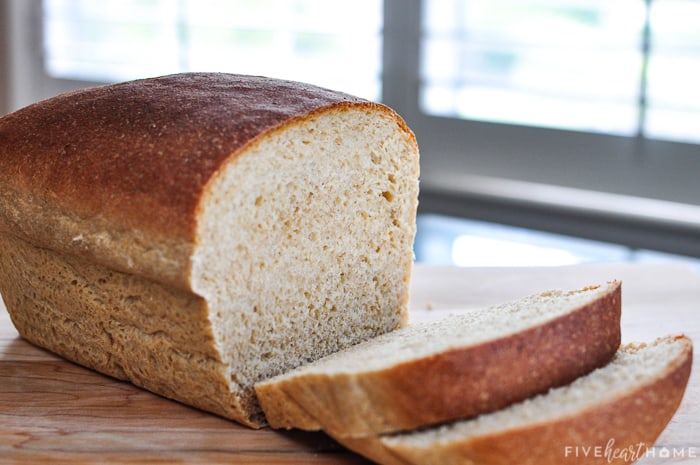
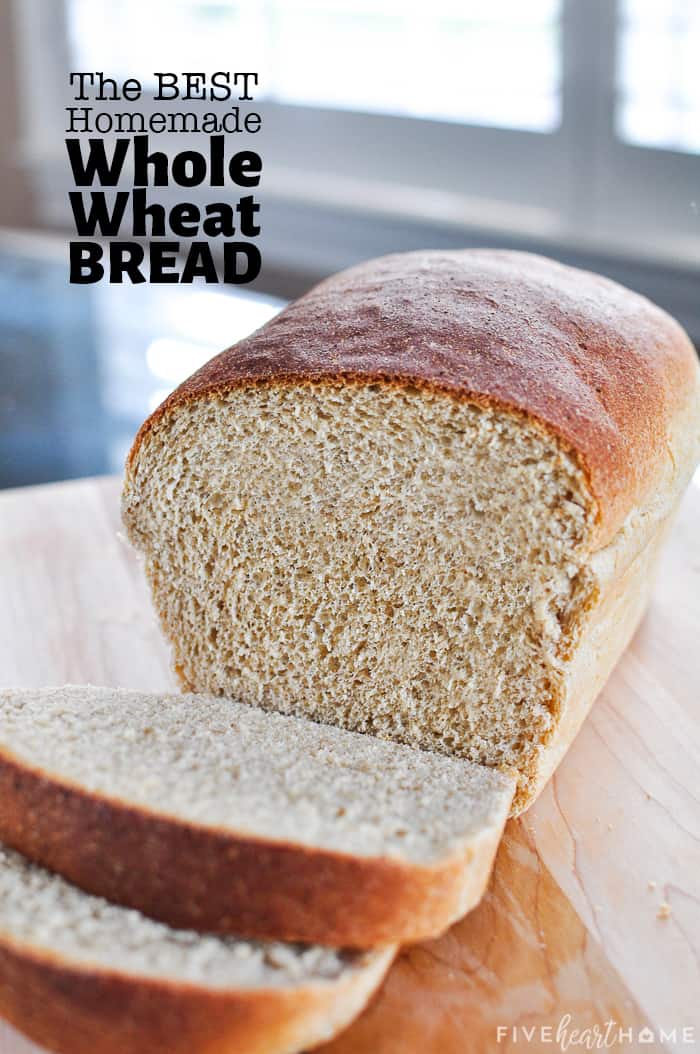
The Very BEST Whole Wheat Bread is the softest, moistest, fluffiest, freshest-staying, homemade, 100% whole wheat bread you've ever tried!
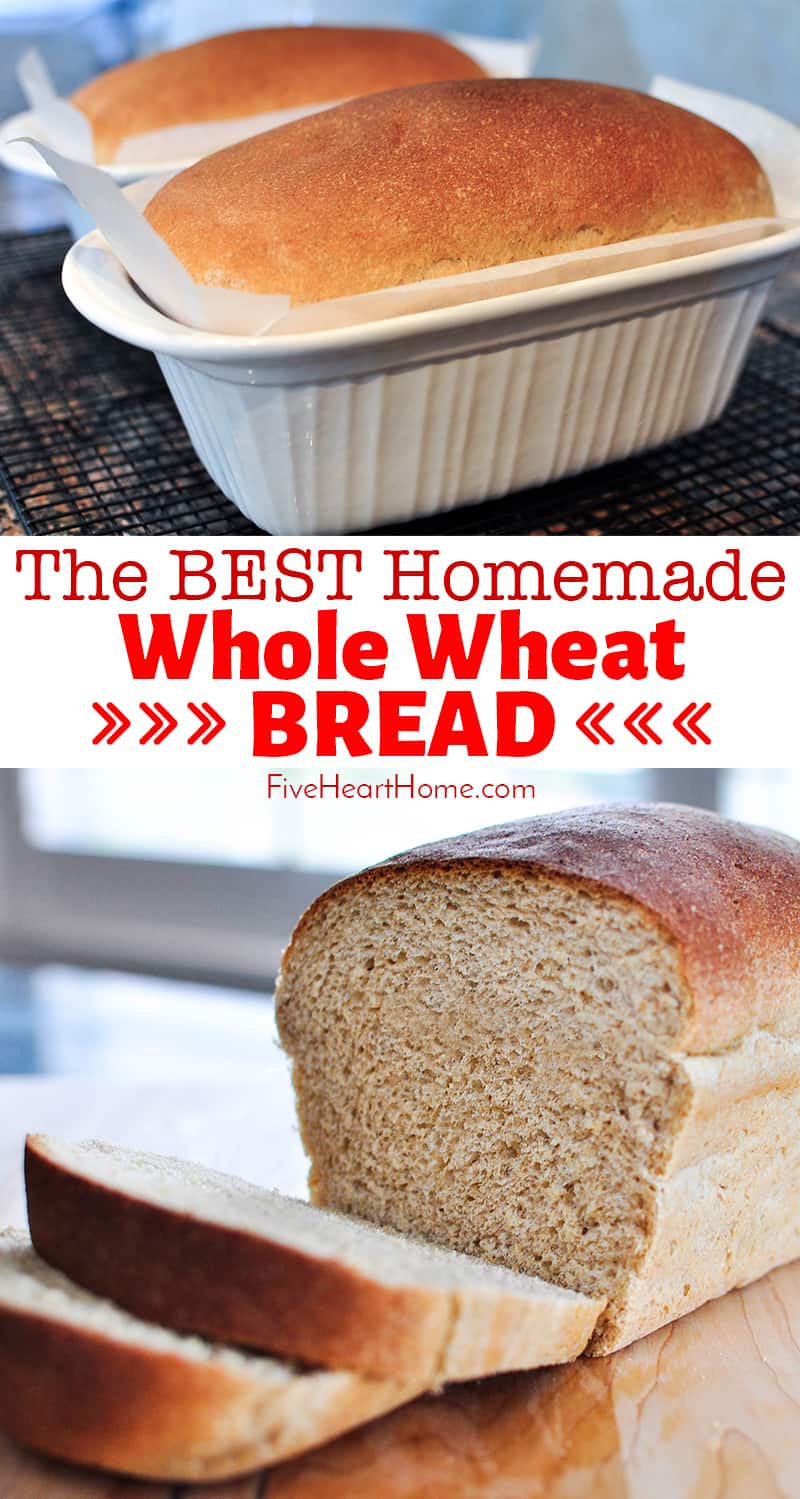
This bread, y'all. This bread. I titled this Whole Wheat Bread recipe "the BEST" and I'm not even exaggerating here. I've baked many a whole wheat bread recipe over the years, and this one is head-and-shoulders above the rest.
Hundreds of raving comments (since I first published this recipe six years ago) can't be wrong...right?! So I decided to update this old post with tons of additional information and tips to help ensure your bread making success!
THE BEST Whole Wheat Bread
Here's the deal...what makes this bread so amazing is that it stays soft and fresh for days after it's been baked.
Just about all homemade bread tastes fabulous fresh out of the oven. But then whatever isn't initially eaten tends to dry out a bit as the days stretch on, particularly in the case of wheat bread.
But this bread is just as good on the third day (if it lasts that long!) as it was on the first. Seriously! I wouldn't believe it if I hadn't experienced it first hand myself. It's like store-bought, stay-soft bread without the preservatives. Forgive me for going all Scarlett O'Hara on you, but as God is my witness, I'll never make another whole wheat bread recipe again!
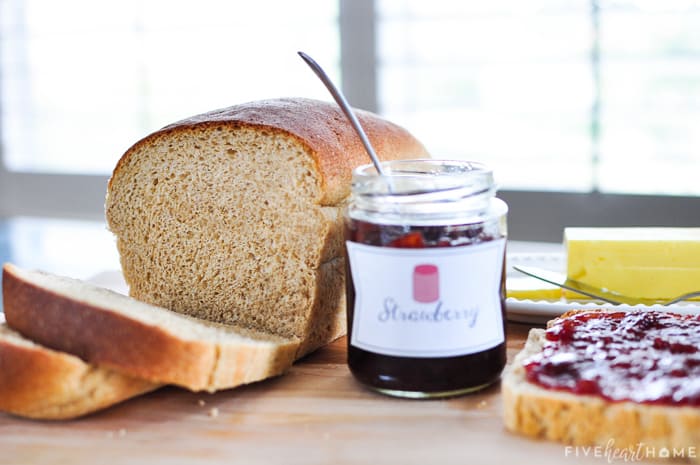
The Best Whole Wheat Flour for Bread Baking
One of my bread making tricks is that I like to use white whole wheat flour when I make bread. Even though it has the word "white" in its title, this flour is 100% whole wheat.
Traditional whole wheat flour is milled from red wheat; white whole wheat flour is milled from (hard) white wheat. Its lighter grain results in a milder flavor and lighter texture than the whole wheat flour to which most of us are accustomed.
Don't be fooled by the taste, though...white whole wheat flour is unrefined and 100% whole wheat! It's nutritionally the same as its red wheat cousin. I buy King Arthur brand unbleached white whole wheat flour, but I'm sure there are other brands out there that would work just as well.
How to Make the Best Whole Wheat Bread
Not only does this whole wheat bread turn out better than most, but the recipe is actually simpler to make than most! Some of the steps may seem a bit unconventional to an experienced bread maker. But if you give this recipe a chance, I think you'll be pleased with the results.
- Fit your stand mixer with a dough hook. Measure out flour, vital wheat gluten, and instant dry yeast into the bowl and mix until combined.
- Pour in very warm water (between 120°F and 130°F) and mix for one minute. The water needs to be hot enough to activate the yeast but not so hot that it kills it.
 Cover with a clean kitchen towel and allow to rest for 10 minutes.
 - Uncover the bowl.
Beat in salt, oil, honey, and lemon juice. - Add more flour, mixing it in one cup at a time until well incorporated. Allow the dough hook to knead the dough until it becomes smooth instead of sticky and pulls away from the side of the bowl.
This typically takes 10 to 15 minutes but may take as little as 5 minutes. - Grease and/or line your pans and set aside.

- Turn on the oven to 350°F. After exactly one minute, turn it back off. This will preheat the oven to lukewarm...just enough to give your loaves the perfect warm spot to rise!
- Turn the dough out onto a greased surface.
Divide it equally in half and shape it into two loaves.
Transfer the loaves to the prepared bread pans, pressing the dough into the corners.
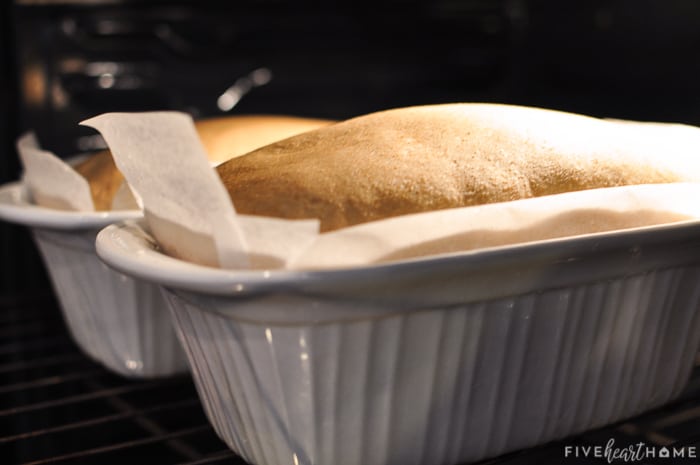
- Place the pans in the warm oven and allow them to rise for 20 to 40 minutes, or until they are nicely domed and as high as you wish your final whole wheat bread loaves to be.
- Once the loaves have risen to your liking, turn on the oven to 350°F WITHOUT TAKING THE BREAD OUT OF THE OVEN. Set the timer for 30 minutes. I know, I know...sounds weird. But trust me.
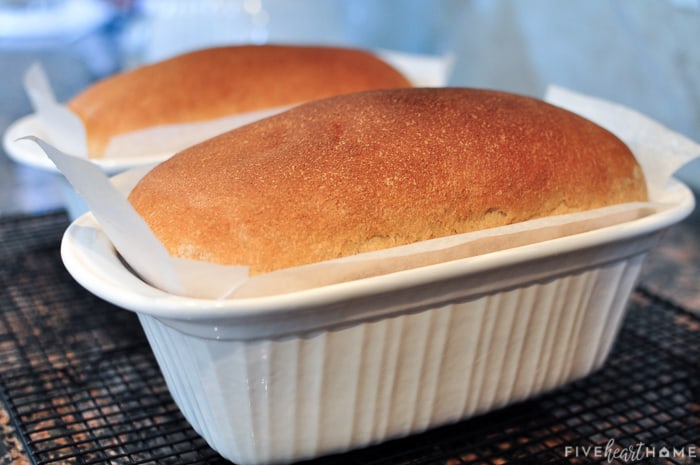
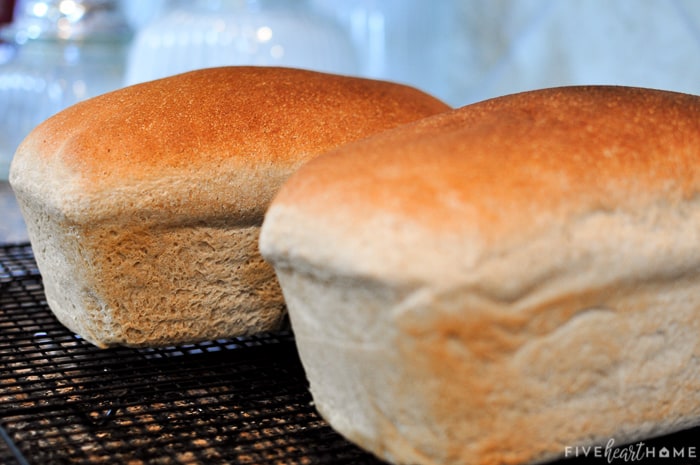
- Your bread is done when it's golden brown on top with an internal temperature from 190°F to 200°F on an instant-read thermometer. Turn the hot loaves out onto a rack to cool completely.
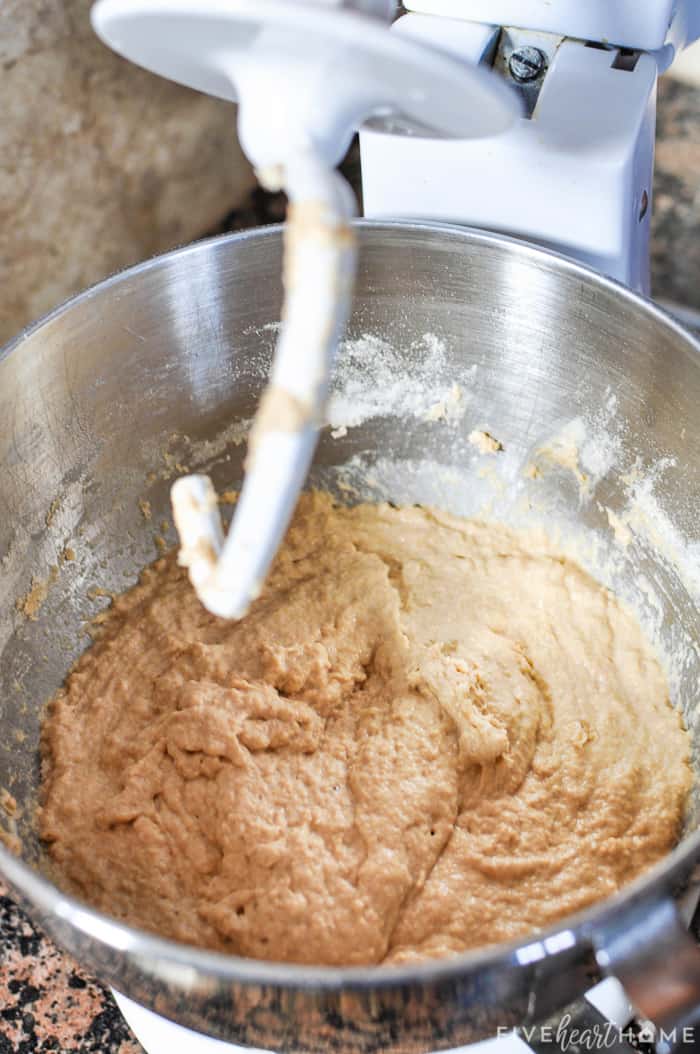 Cover with a clean kitchen towel and allow to rest for 10 minutes.
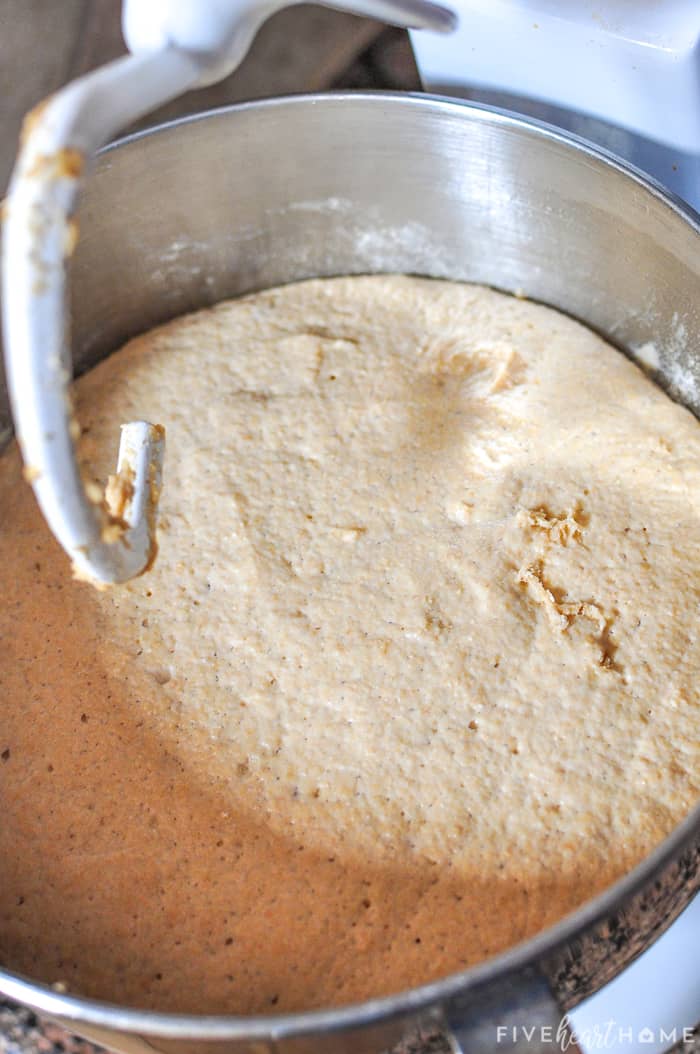 Beat in salt, oil, honey, and lemon juice.
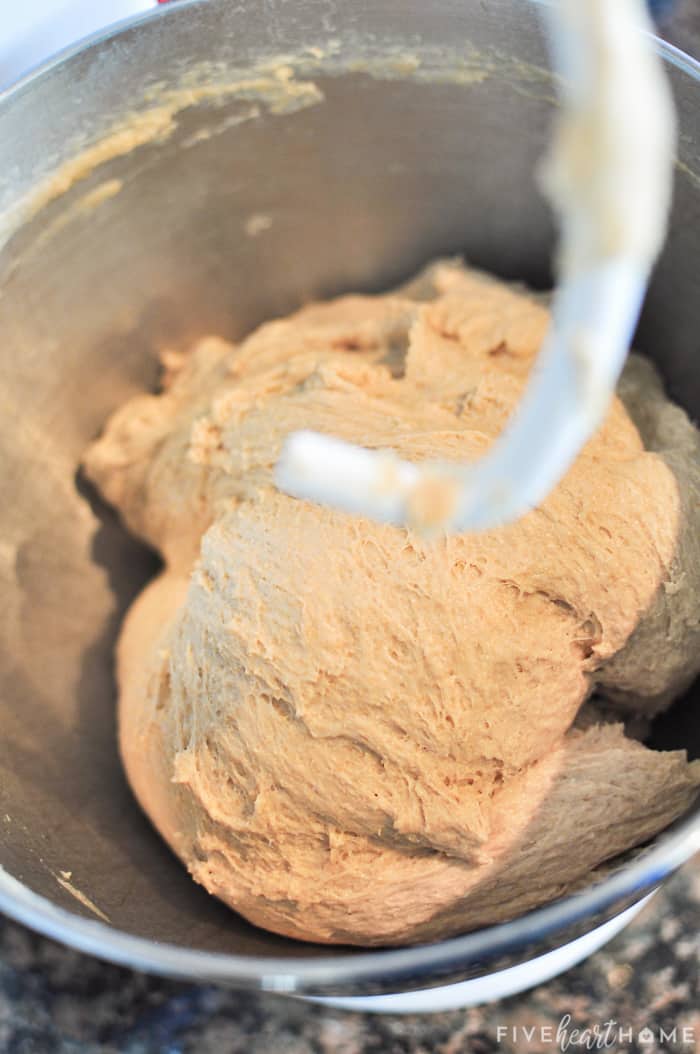 This typically takes 10 to 15 minutes but may take as little as 5 minutes.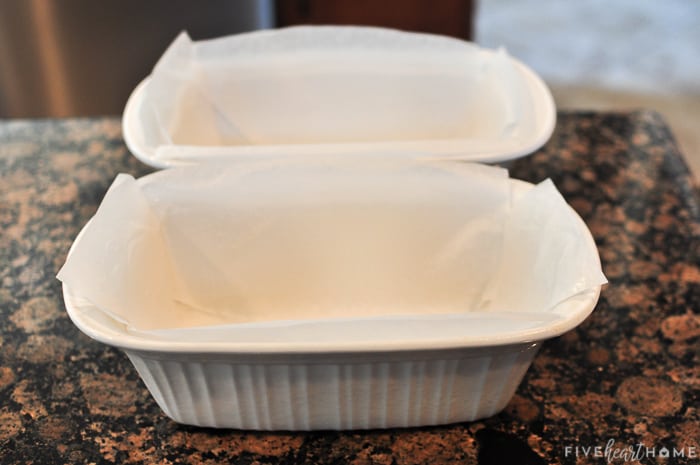
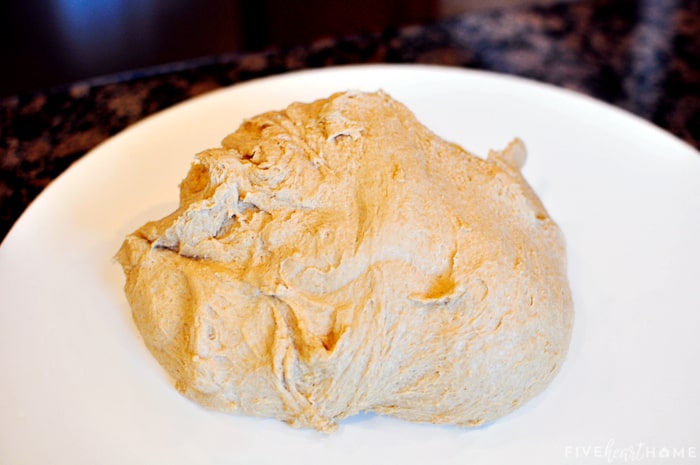 Divide it equally in half and shape it into two loaves.
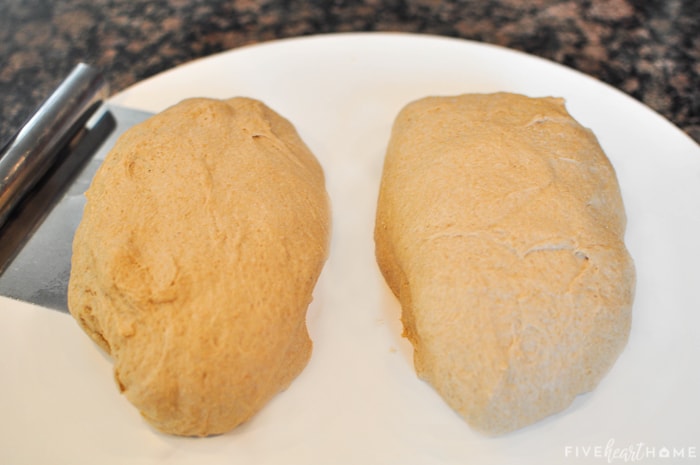 Transfer the loaves to the prepared bread pans, pressing the dough into the corners.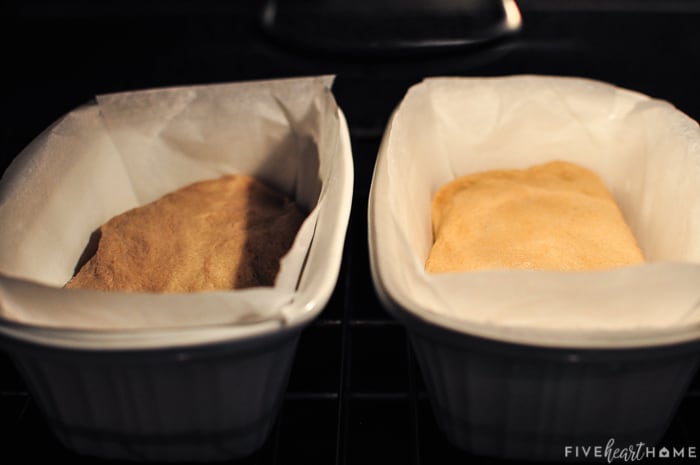
And that's it. One step at a time...you can do this!
What's a Bread Sponge?
Let's talk about step #2 for a moment, shall we? I believe that the biggest factor that makes this bread stay so soft and fresh is the step in the recipe calling for you to make a sponge. Now I'm not talking about the kind of sponge you keep by your kitchen sink. In bread making, a sponge is a very moist dough that just begins to rise as it gives the yeast a head start. After it's had some time to do its magic, you add more flour and ingredients and proceed with the recipe. The sponge in this recipe only needs to sit for about 10 minutes. But apparently that's all it takes to achieve this bread's wonderful texture.
Ingredient Substitutions
For optimal results, make this whole wheat bread as directed. However, the recipe will still work (and even turn out great) incorporating a variety of substitutes. Just keep in mind that changing the ingredients may result in a different taste and/or texture in your final loaves. Switching ingredients could also require you to tweak an amount or a step, such as needing to add extra flour and/or kneading a bit longer to achieve the proper dough consistency. But if you're willing to experiment a bit, people have had success with the following substitutions...
(NOTE: Many of the below recipe tweaks have been taken from the comment section. I have not tried all of these substitutes myself.)
- Flour. You can make this recipe with regular (as opposed to "white") whole wheat flour. Or you may substitute all-purpose white flour for around half of the whole wheat flour. You may also use freshly ground whole wheat flour (milled from red wheat or white wheat). Just keep in mind that fresh milled flour is much "airier," so you may need to allow it some time to pack down before measuring it out...or just plan on using extra flour, as necesary. Also, with any flour substitution, you may need to slightly adjust the amount of flour added at the end of the recipe. For example, if the dough seems extra sticky and doesn't start pulling away from the bowl in a timely manner, you can work in additional flour (one spoonful at a time) until the texture seems right.
- Vital Wheat Gluten. This ingredient helps whole wheat bread recipes rise, and it encourages soft and chewy loaves with that stay-fresh quality. That being said, if you don't have any on hand or prefer not to use it, many people report having made this bread successfully while leaving out the vital wheat gluten.
- Yeast. I recommend using instant dry yeast (sometimes called "quick rise" or "rapid rise"), as directed in the recipe. You might have success if trying regular active dry yeast...but then again, maybe not. 😉 If you do decide to gamble on active dry yeast, my research indicates that to substitute it for instant dry yeast, you should multiply the amount by 1.25.
- Lemon Juice. If you don't have any lemon juice on hand, you may substitute another type of acid in its place. Orange juice, white vinegar, or apple cider vinegar would all work.
- Honey. You may reduce the honey, if you wish. Also, maple syrup or agave may be substituted for the honey.
Other Recipe Notes
- The stand mixer pictured in this post is a classic, 5-quart, tilt-head KitchenAid.
- You may halve this recipe to make only one loaf of bread.
- You can also make this bread by hand...just prepare your muscles for all of that kneading.
- People have also reported success in halving the ingredients and making this recipe in a bread maker. But I don't own a bread maker and I'm not sure of the specifics...so you may have to experiment on that one. 😉
Avoiding Sticking
The only difficulty that I ran into the first time I made this bread is that it stuck to my loaf pans, despite the fact that I had generously greased them. Nonstick pans are recommended for this recipe, so if you've got 'em, use 'em! But since I prefer baking in my stoneware pans, I figured out a way around not using nonstick.
I grease my pans with coconut oil and then line them with parchment paper, using the coconut oil to adhere the paper to the pan. I find that if I cut a piece of parchment paper the length of each pan and allow it to somewhat stick out the sides, then I only need to cut two small pieces of paper per pan for the ends that remain uncovered. The key is pressing the parchment paper down and smoothing it as much as possible so you don't end up with a bunch of creases in your bread.
How to Store Your Whole Wheat Bread
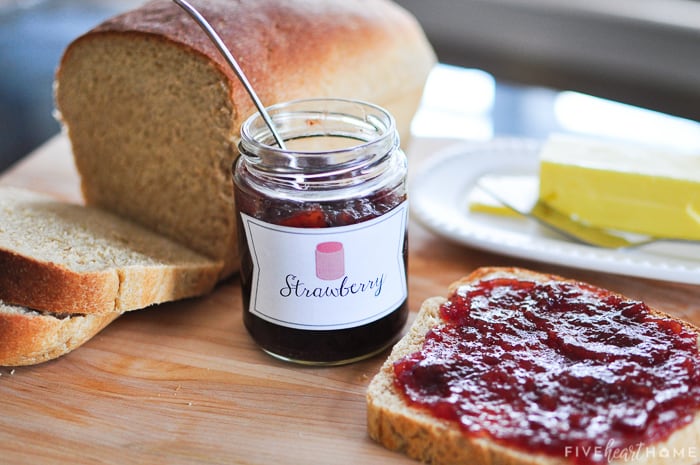
This recipe makes two loaves, so I like to keep one wrapped (I use Glad Press 'n Seal) and stored in the pantry for eating. The second loaf I keep wrapped up in the refrigerator until we're ready to enjoy it.
I have a bread box, but I still prefer keeping my loaf wrapped inside of the bread box. And when I cut off the first slice, I store that end piece pressed against the cut end of the loaf as a kind of "cap" to help prevent it from drying out. When we're ready for the second loaf, I take it out of the fridge and store it at room temperature in the bread box.
Since this is fresh homemade bread with no preservatives, it will start to mold after several days. So keeping that second loaf in the fridge until we're ready for it buys us some extra time. You could also successfully freeze the second loaf if you prefer. However, we usually eat it soon/fast enough that refrigerating suffices.
If it takes your family awhile to work through two loaves of bread, another winning alternative would be to give the second loaf away! I mean, who wouldn't love the thoughtful gesture of freshly-baked homemade bread?
If you have never baked homemade bread before, I encourage you to try it. It may seem intimidating at first and the various steps do take a bit of time, but overall, it truly is easy. And if you are already an expert baker, then I hope you'll add this recipe to your repertoire!
Now go forth and make bread!
And psssst...if you happen to love this bread recipe, I actually adapted it to make The Very BEST Whole Wheat Dinner Rolls! Your holiday table won't be the same without 'em. 😉
Whole Wheat Bread Recipe
The Very BEST Whole Wheat Bread
Ingredients
Step 1:
- 3 ½ cups white whole wheat flour
- ⅓ cup vital wheat gluten
- 4 teaspoons instant dry yeast, "quick rise" or "rapid rise"
Step 2:
- 2 ½ cups very warm water, 120°F to 130°F
Step 3:
- 1 tablespoon salt
- ⅓ cup coconut oil, melted and cooled (OR vegetable oil)
- ⅓ cup honey
- 4 teaspoons lemon juice
Step 4:
- 2 ½ cups white whole wheat flour
Instructions
- In the bowl of a stand mixer fitted with a dough hook, mix together 3 ½ cups white whole wheat flour, vital wheat gluten, and quick-rise yeast until well combined.
- Add the water and mix for one minute, scraping down bowl halfway through. Cover the bowl with a clean kitchen towel and allow to rest for 10 minutes.
- Uncover the bowl and add the salt, oil, honey, and lemon juice. Beat for 1 minute.
- Add the remaining 2 ½ cups of flour, one cup at a time, mixing well between each cup. Knead the dough in the mixer (still using the dough hook) until the dough pulls away from the sides of the bowl and feels smooth rather than sticky. This usually takes 10 to 15 minutes, but if your dough pulls away and loses its stickiness sooner, it could take as little as 5 minutes.
- Grease two nonstick bread pans measuring 8 ½" x 4 ½" x 2 ½" to 9" x 5" x 3" each (or grease two regular bread pans and then line them with parchment paper). Preheat the oven to lukewarm by setting it to 350°F and then turning it back off after exactly 1 minute.
- Turn the dough onto a greased surface. Evenly divide it into two loaves. Form and place the dough into the prepared bread pans, gently pressing it into the corners.
- Place the pans in the warm oven and allow them to rise for 20 to 40 minutes, until the dough is nicely domed above the tops of the pans. Without removing the pans from the oven, turn on the oven to 350°F and set the timer for 30 minutes. The bread is done when the tops are golden brown and the internal temperature reaches 190°F to 200°F on an instant-read thermometer. Once the loaves are baked, immediately remove the hot bread from the pans to cool on a rack.
EQUIPMENT NEEDED
Notes
- I use coconut oil in this recipe. It works wonderfully and doesn't make the bread taste like coconut at all. However, you may use sunflower, safflower, or another light-flavored vegetable oil, if you prefer.
- Kneading and rising times are approximate and depend on many different variables. The dough must be kneaded until it pulls away from the bowl and is no longer sticky, even if that takes shorter or longer than 10 to 15 minutes. Also, the dough should be allowed to rise in the pans until it is as high as you want your final bread to be.
- White whole wheat flour is 100% whole wheat flour that yields a lighter taste and texture than regular whole wheat flour.
- Other types of flour (regular whole wheat flour, all-purpose white flour, freshly milled wheat flour, etc.) may be substituted for the white whole wheat flour in this recipe. Just keep in mind that the final flavor and texture of the bread may turn out different. Also, if you use an alternate flour (particularly freshly milled flour, which can be less dense), you may need to slightly adjust the amount of flour added at the end of the recipe. For example, if the dough seems extra sticky and doesn't start pulling away from the bowl, you can work in additional flour, one teaspoon at a time, until the texture seems right.
- If you don't have any lemon juice on hand, you may substitute another type of acid in its place (such as white vinegar or apple cider vinegar).
- Vital wheat gluten helps whole wheat bread recipes rise and yield soft and chewy loaves. That being said, if you don't have any on hand or prefer not to use it, many people report having made this bread successfully leaving out the vital wheat gluten.
Recipe adapted from Deals to Meals.
Post originally published on July 8, 2013.


Keith and Kathy L
Hi. Samantha. Just wanted to say thanks. My wife and I just made this and it turned out great!! It was our first attempt at homemade bread and I agonized ( I tend to do that when doing recipes for the first time lol) over which of the many online to follow. Yours matched the Flour we bought and the fact that you used a stand mixer which we just bought. Followed it to the letter btw. We used metal bread pans and no issues with sticking.Curious if you have tried this or other bread using non quick rising yeast and letting it rise in a bowl like many other recipes have you do? Also your thoughts on making this a bit lighter by using some other flour as a portion of the total amount? We loved it but our adult daughter mentioned it had amazing flavor but wished it was a bit lighter. I saw some recipes use a combo of flour types. Regardless we are thrilled that we had such a great result on our first time. lol! Thanks again
Asl
Hi I was wondering if I could substitute the honey for regular granulated sugar and omit the vital wheat gluten? Thanks!
Samantha at Five Heart Home
Hi there! I haven't tried those particular changes, so I can't say for sure how they might affect the recipe. But please let us know how the bread turns out if you decide to give it a try! 🙂
JACKIE
I was just wondering if this could be used in a bread machine ? I have no time due to a 24/7 hr job for a i an a care giver to my neighbor that is disabled and 83 years old and have three kids all under the age of 8 to 15 months old and i love to make home made bread for them i just never have time so for Christmas i was gifted a bread machine I jave made a honey whole wheat bread in it last wheat but it fell apart after three days and was dryed out thanks !
Samantha at Five Heart Home
Hi Jackie! I'm sorry, but I don't have a bread machine adaptation for this recipe. I do hope you're able to find a bread machine recipe that you like!
Cassandra
Hi! Could I able to substitute the whole wheat flour for 12 grain flour? Looking forward to trying this recipe!
Samantha at Five Heart Home
Hi Cassandra! Great question. I'm guessing it would work, but since I haven't tried it myself, I'm not sure if you may need to make adjustments. Using a different flour, it's possible that you might have to add slightly more or less flour than called for in the recipe to get the right bread dough consistency. Good luck and hope you enjoy!
Judy
Hi Samantha I am just trying this recipe - I am in the UK and only found normal wholemeal bread flour. I ommited the honey as we don't do sweet bread over here ? but I had a feeling that it would be too much liquid anyway. Now I am mixing the dough and its basically a gooey mess and very liquidy. Is your flour somehow different and requires more water or are our cup sizes different here in the UK? The ratio should have been fine though because I used the same size cups overall. Any idea?
Gloria Huerta
Dear Five Heart Home - I baked this bread yesterday, made two loaves. It is the first time I have ever, ever, ever in my entire baking life that my bread has come out to perfection. IT was just as pictured. I had to let it rise a little longer. I set it in my Breville Smart Oven at "keep warm" 160F for one hour. After that, I turned it up to 350 for 30 minutes. I wish I could post a picture here. We waited for it to cool down and enjoyed it with some Maine Blueberry Jam. The only substitution I made was olive oil for the coconut oil. I will make again using coconut oil. I am now empowered! YIPPY!! I will attempt to make a rye or pumpernickel next. Any good ideas? Thanks so much. I am so glad I found your recipe by "Googling"!
Ellen C.
Love this recipe and have now made it many, many times. I use regular dry yeast and reduce the honey to just a little over a teaspoon (we try hard to eliminate any added sugar - natural or refined). This bread could probably be made without the honey but I've read that whole wheat flour can be bitter without a little sweetener. I let it rise in a bowl on the counter after the initial mixing and then let it rise once more after placing it in the loaf pans (another person in the comment section suggested this with regular yeast). I like to use a sun oven and bake this bread in that oven and also my regular oven. It always turns out wonderfully and it is incredible how soft it stays. I've never had any luck with other whole wheat bread recipes - I always produce a brick. Not with this recipe - incredible! Thanks so much!
Samantha at Five Heart Home
Thank you for sharing your tips and experience, Ellen! I'm very happy to hear that you enjoy this bread so much. 🙂
Tawnia
I made this bread for the first time a few days ago...and am making it for the second time today. Its amazing! I forgot to let it rest for the 10min after mixing the initial ingredients but it still turned out great! My rising time was much longer but I think it was because the room was cooler for the first part of it - I put it on "Proof" in my oven and it rose up just fine after that. I used regular whole wheat flour because I am in Canada and could not find "white whole wheat" and left out the vital wheat gluten and it was still amazing and soft. I used vegetable oil because I couldn't be bothered to make the extra step and melt the coconut oil lol. My kids and husband loved it - and are asking me to make a double batch today and never buy bread again (lol) we live an hour and a half from the nearest town/store so a recipe like this is invaluable! It stayed soft until the very end (3rd day) which is amazing for bread with no preservatives. I am making it again today, a double batch, and making one "loaf" worth into hamburger buns for dinner tonight. Thanks so much for the amazing recipe! I have pinned and shared it! 🙂
Samantha at Five Heart Home
I'm thrilled to hear that this recipe turned out great for you and went over so well with your family, Tawnia! The way that it stays so soft and fresh for several days is probably my favorite thing about it. 🙂 Hope you enjoy it for years to come!
Crystal
This was my first time baking with vital wheat gluten and I'm so glad I followed your recipe! It came out so wonderfully soft and not dense that whole wheat bread is known to be.
Also THANK YOU for the idea of using the bread cap to stop it from drying out, would never have crossed my mind - genius! 🙂
Samantha at Five Heart Home
Yay, Crystal! Thanks for taking the time to let me know how much you enjoyed this recipe. I'm happy to hear it was such a hit!
Liz
Love this recipe! I used to love white bread, but I can't taste store bought bread without thinking it tastes kinda weird now lol I've done it as is, and with half white and half wheat flour and it turns out perfect.
BUT the family was hoping I could adapt this bread to be a tad sweeter!
I know baking doesn't always work when you 'throw a dash of this in'. I tried adding a T of sugar, but it rose odd; I thought maybe less yeast would work but I have yet to try that. So before I make another batch (and possibly ruin it), I thought I'd ask the expert if you knew a way to add a little sweet to this recipe!
Mari
This bread has very good flavor! I used 100% whole wheat (white wheat) flour from Wheat Montana. Wheat Montana grows non-GMO wheat, which is a real bonus for me. The loaves turned out perfectly high and domed. They looked BEAUTIFUL!!!! I was so proud of myself, and excited to cut into it! I think that the only downside for me was that the texture was identical to commercially made sandwich bread, so it affected the mouth feel and, as such, did not taste like homemade. This recipe would be perfect for families with kids who (typically) like soft, store bought bread. Thanks for sharing your recipe!
Rachel
Samantha, I was wondering if you could make a video on how to do this bread. I'm a visual person and I learn a lot better if I see someone doing it, especially on how you mix the dough until it starts to pull away from the bowl. I would just like to see exactly how you do it. I've done this bread many times and it never comes out like yours so I know I'm doing something wrong. Please help me because I know that this bread is AWESOME and we all love it. Thanks for your help.
rahilya
loved it. tried it as a loaf and was fabulous and tried it as rolls and sandwich bread and was great!! and i dont even have this vital wheat gluten business though I did add a tablespoon of "bread improver". thank you for sharing such a great recipe. it is the best bread recipe i have ever tried, let alone a whole wheat one. I'm sharing with all my loved ones!!
Samantha at Five Heart Home
Yay! So happy to hear that, Rahilya. 🙂 I bet that your "bread improver" did the same thing that the vital wheat gluten would have done. Thanks for coming back to share your success with the rest of us!
Maiya
Hi Samantha!
I would recommend using melted real butter! I get mine from my local farmers market. I always feel more environmentally friendly when I'm buying local and supporting my local economy.
Thanks for the recipe! 🙂
Samantha at Five Heart Home
Great recommendation, Maiya...I bet your local butter is divine! 🙂
Donna
What size bread pans are you using for this?
Samantha at Five Heart Home
Hi Donna! The specific bread pans I use are linked right under the recipe. 🙂 People have reportedly gotten good results using either 8 1/2" x 4 1/2" x 2 1/2" or 9" x 5" x 2 1/2" bread pans...anything close to or between those sizes should work fine. Good luck!
Faith
Do you think there's any way this could be done in a breadmaker? Maybe halve the recipe, do the first step through sponge in the stand mixer then transfer to breadmaker and add additional ingredients? Do you think that would work?
Samantha at Five Heart Home
Hi Faith! I, personally, have not made this recipe in a bread machine. But that question has come up before and I've made suggestions for what might work, and other commenters have shared what's worked for them. I know there are a ton of comments, but if you scroll down to the comment by Colleen on November 1, 2013, I shared with her what I thought might work as far as converting this recipe to a bread machine...then later, a few others commented that they tried my suggestions and the bread turned out great. Hope that helps! 🙂
Donna
I've tried to find Colleen's comments from 2013, but it won't let me go back that far. Is there anyway you can repeat the instructions for making it in a bread machine? I would really appreciate it!!
Angela
Samantha, I am in utter disbelief that I have successfully made homemade bread! I have been on a mission this summer to lead my little family to eat, clean, and live healthier. We are eating organic, whole, minimally processed foods...about 85% of the time. I've worked hard to minimize dangerous chemicals from our cleaning products and toiletries. All summer long, I have been thinking about making bread and have just been a bit intimidated. Well, I sent my oldest off to school this week and dove into your AMAZING recipe with my two year old. My expectations were not high because this was my first try and I would be kneading by hand. Samantha, I did it and it was so fun and delicious! The first loaf was gobbled up in a day and a half by my family. Today, I delivered the other loaf and some organic honey, organic fruit spread, and a few other goodies to my sweet mom for her birthday. A huge hit for sure. I have plans of delivering loaves to neighbors and church friends. I can't thank you enough for sharing this awesome recipe. I was kinda thinking my first try at making bread may have been beginner's luck or divine intervention (Ha!). I made the recipe this afternoon with both of my boys and two more lovely loaves. We'll have warm bread with supper tonight! I look forward to checking out the rest of your site. God bless you girl!
Samantha at Five Heart Home
Thank you for the sweet comment, Angela! It makes me very happy to hear that you've had such success with this recipe. What a thoughtful person you are to share this bread with your family members and friends (and how lucky they are!). Hope you enjoy any other recipes you decide to try from the site, and I hope you have a fantastic weekend! 🙂
Tammy
Hi! I buy lard from my local farmer. I'm assuming I could treat that the same as coconut oil. Any ideas on how that might change the taste, texture, etc?
Samantha at Five Heart Home
Hi Tammy! I bet lard would work just fine as a substitute for the coconut oil in this recipe...but since I haven't tried it myself, I'm afraid I can't advise you as to how it might change the taste and texture of the bread. If you decide to give it a try, I hope you'll come back and let us know how it turned out! 🙂